Cash for junk cars, any condition
We pay cash for junk cars in any condition: running or not, wrecked, flooded, seized, stripped, or sitting on a lawn for six years. Tell us what you have, get an offer, and if you take it we tow it free and pay you when we collect it.
- Running or not: wrecked, flooded, seized or sitting for years
- Free towing, included in every offer
- Paid at pickup, when we collect it


Most junk cars sell for $200 to $700. A complete car that still runs and drives can bring $750 to $2,200 or more, and trucks and SUVs sit above cars at every grade because they carry more steel and stronger parts demand. The number is set by four things: the catalytic converter, parts demand for your model, your state's scrap rate, and whether the vehicle is still complete.
That is the whole service. The rest of this page covers what your car is likely worth, what paperwork you will need, and how the process actually runs, because those are the three things people want answered before they hand over a vehicle.
200K+
Cars sold through Clunqr



Junk cars we bought recently
Real transactions from Clunqr buyers across the country. Condition and payout as recorded at the time of sale, so you can see what these numbers look like on actual cars rather than in a range.
Payouts reflect the vehicle, its condition and the local market on the day of sale. Yours will differ. The fastest way to find out by how much is to get an offer.
What actually sets the number
A junk car's value is not really about the car as transportation. It is about what can be recovered from it. Four things drive the offer, in roughly this order.
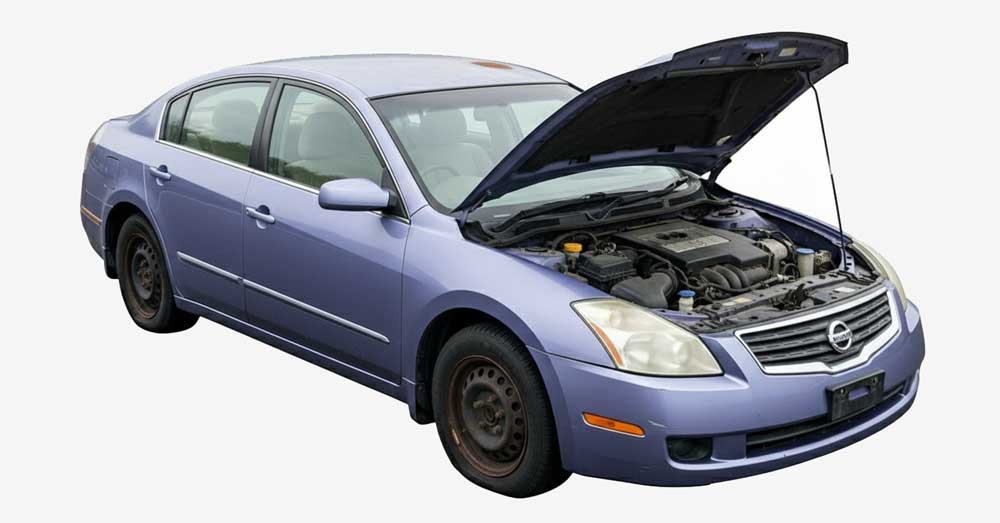
A full-size pickup or SUV can carry 1,500 pounds more steel than a compact car. On scrap value alone that is a meaningful difference before parts demand is even considered.
What junk cars sell for, by condition
Four condition grades, split by vehicle class. Every bar is drawn on the same scale, so you can see the spread rather than read eight separate numbers.
| Vehicle and grade | Condition | Typical payout$0$1,400$2,800 |
|---|---|---|
| Trucks and SUVs · Grade A | Runs and drives | $1,000 to $2,800+ $1,000 to $2,800+ |
| Cars · Grade A | Runs and drives | $750 to $2,200+ $750 to $2,200+ |
| Trucks and SUVs · Grade B | Needs work | $700 to $2,000+ $700 to $2,000+ |
| Cars · Grade B | Needs work | $450 to $1,500+ $450 to $1,500+ |
| Trucks and SUVs · Grade C | Does not run | $175 to $1,000 $175 to $1,000 |
| Cars · Grade C | Does not run | $150 to $750 $150 to $750 |
| Trucks and SUVs · Grade D | Scrap only | $300 to $675 $300 to $675 |
| Cars · Grade D | Scrap only | $150 to $400 $150 to $400 |
Bars run on a $0 to $2,800 scale. A bar that fades out on the right has no fixed ceiling. Every grade assumes the catalytic converter, wheels and battery are still fitted. A car stripped of those drops toward the bottom of its grade regardless of how well it runs. Grade A and B are open-ended upward because a complete running vehicle is valued against resale as well as parts.
Current scrap rates by state
Per-ton rates for complete vehicles, updated monthly. If an offer you have been given is far below what your state supports, it is worth asking why.
These are yard rates for a vehicle delivered complete, and they move with the global metal market. A car picked up free from your driveway nets differently than one you haul in yourself, and parts value sits on top of the scrap figure rather than inside it.
What counts as a junk car?
Broader than most people assume. You do not need a rusted shell on blocks. We buy junk cars for cash whenever the vehicle:
What we buy
We buy junk cars of nearly every description: cars, trucks, SUVs, vans and minivans, and motorcycles or commercial vehicles in some areas. Find your situation below.
How it works
Four steps, and the only one that takes any effort is the first.
Year, make, model, mileage, condition, and whether it runs. Be accurate. The offer is based on what you describe, and a surprise at pickup means renegotiating in your driveway, which nobody enjoys.
A real number, not a range, priced on the parts, converter and scrap rates where the car actually is.
Often same or next day depending on your area. Pick a time that works and we send a truck.
Our driver confirms the vehicle matches the description, you sign the paperwork, you get paid, the car goes on the flatbed.
What you'll need
Requirements vary by state, and we confirm yours before a driver is dispatched.
Free towing, always
Towing is included in every offer. It is not deducted, and there is no separate charge. The number we quote is the number you are paid.
The car does not need to run, roll, or have keys. What our driver needs is access for a flatbed or wheel-lift. If the vehicle is in a garage, blocked in by other cars, on a steep unpaved drive, or in a tight alley, mention it when you get your quote so we send the right truck.
A car that needs winching out of a backyard, or sits somewhere a flatbed cannot reach, is still collectable. It just needs the right equipment on the first visit rather than the second.
Selling for cash vs the alternatives
Worth being straight about the alternatives, because for some cars one of them is the better trade.
| Option | What you get | Effort | When it wins |
|---|---|---|---|
| Cash for junk cars | What you get:Parts, converter and scrap value, paid at pickup | Effort:Low | When it wins:The car does not run, has no realistic retail value, or you want it gone this week |
| Private sale | What you get:Retail value, if the car has any | Effort:High | When it wins:It runs, drives and is genuinely worth more than a couple of thousand dollars |
| Dealer trade-in | What you get:Often little or nothing on a non-runner | Effort:Low | When it wins:You are buying another car anyway and the trade has real value |
| Charity donation | What you get:A deduction capped at what the charity sells it for | Effort:Medium | When it wins:You itemize, you are in a high bracket, and the cash matters less than the cause |
| Haul it to a scrapyard | What you get:Weight only, priced per ton | Effort:High | When it wins:The car still drives and a yard near you pays well above your state average |
The car does not run, has no realistic retail value, or you want it gone quickly without the logistics. In those three cases cash for junk cars beats every alternative once you account for the effort.
What happens to your car afterwards
It goes to a licensed dismantler or auto recycler. Fluids are drained and disposed of under environmental regulations, the battery, tires and catalytic converter are removed, reusable parts are inventoried and sold, and the remaining hulk is crushed and shredded for scrap steel.
Depending on your state, the VIN is retired via a certificate of destruction or junking certificate, which means the vehicle can never be titled for road use again.
Where we buy junk cars
Everywhere in the continental United States. We work through a network of licensed local buyers with their own tow trucks and drivers, so there is no part of the lower 48 we cannot get a truck to.
That network is also why the offer is priced on your state's scrap rates and your area's parts demand rather than a national average. The same car is worth different money in different markets, and the quote reflects where the car actually sits rather than where we do.
Give us the ZIP code with the year, make and condition and we will tell you what we can pay and how soon a truck can be there.
Cash for junk cars: common questions
How much cash can I get for my junk car?
Most fall between $200 and $700, with complete running vehicles reaching $750 to $2,200 or more. The number is driven mainly by the catalytic converter, parts demand for your model, current scrap metal prices, and how complete the vehicle is.
Do you buy cars that don't run?
Yes. Non-running vehicles are a large share of what we buy, and free towing is included.
Can I sell my junk car without a title?
In most states, yes. Licensed dismantlers can typically acquire a vehicle using a salvage or junking certificate rather than a standard title transfer. A few states are stricter.
Is towing really free?
Yes. It is included in the offer, not deducted from it. The number we quote is what you are paid.
How do I get paid?
At pickup, once the driver has confirmed the vehicle matches the description and the paperwork is signed.
How fast can you pick it up?
Often the same or next day, depending on your area and driver availability.
Do I need to be there for the pickup?
Usually yes, since the paperwork needs signing and payment needs handing over. Some situations can be arranged differently. Ask when you book.
Should I junk my car or try to sell it privately?
If it runs and has genuine retail value, a private sale usually nets more. If it does not run, needs a repair worth more than the car, or has been sitting for years, junking it is normally the better trade once you account for the effort.
Should I remove parts before selling?
No. A stripped car is worth substantially less, and the reduction is usually more than the parts fetch. Leave the catalytic converter, battery and wheels on the vehicle.
What if I still owe money on the car?
You will need a lien release from the lender before it can be sold, even for scrap.
What do I do about my plates and insurance?
Cancel insurance after the car is collected, not before. Some states want the plates surrendered and a release of liability filed. Check your state's rules.
Will you buy a car that's been sitting for years?
Yes. Long-dormant vehicles are common. Flat tires, a dead battery, or being partly buried in a hedge are not problems.
Do you buy trucks, SUVs and vans?
Yes, and trucks in particular often bring higher offers because of parts demand and curb weight.
What sellers say
Got my offer online, tow truck showed up the next morning, walked away with cash. That simple. Less time than a grocery run.
 Mike R.Verified seller, Aurora CO
I tried two other sites first and both gave me the runaround. Clunqr gave me a real number, showed up on time, and paid exactly what was quoted.
 Sandra L.Verified seller, Sugar Land TX
My car had been sitting dead in the driveway for eight months. Got $375 for it and the driver even helped me clean up the oil stain.
 David W.Verified seller, Phoenix AZ
Get cash for your junk car
Give us the year, make, model and condition, and we will give you a number. If you like it, we will come get it and pay you. If you don't, no obligation and no follow-up pressure.
Get my free offer